In the fashion and luxury goods industry, where production cycles are short and successive collections are frequent, lead time is a strategic indicator. It determines the ability to meet launch dates and replenishment schedules. This article presents concrete levers for measuring, managing, and reducing lead time, while optimizing quality, costs, and collaboration with suppliers.
Lead time refers to the total time between ordering raw materials and making the finished product available to the customer. In the Fashion & Luxury sector, each milestone in the supply chain must be met to ensure the entire process remains seamless, from supplier order confirmation to delivery to the store.
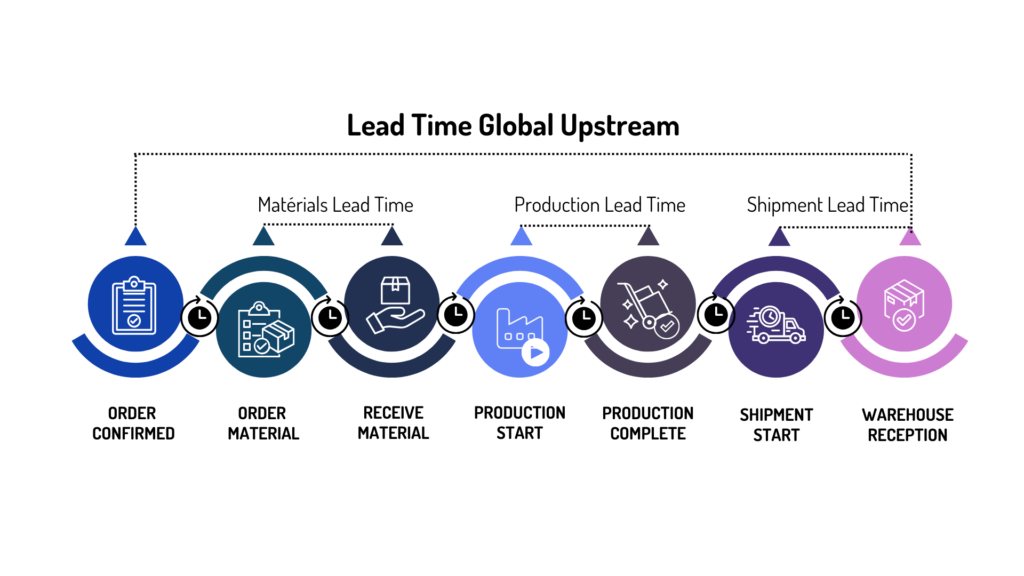
The upstream supply chain in this sector is often fragmented, increasing the risk of lead time slippage. Coordinating raw materials, production, and international logistics is essential to anticipate deviations and find ways to correct discrepancies or mitigate their impact. Key factors include raw material availability, the complexity of manufacturing processes, international logistics, and the management of unforeseen events.
The lead time is calculated using the following formula: Lead Time = Delivery Date – Order Date, it indicates the number of days elapsed between the receipt of the order and its delivery to the store.
This overall measurement must be broken down for each milestone in the supply chain to precisely identify areas for improvement. The lead time represents the time between ordering and receiving raw materials, the production lead time corresponds to the time required to transform these raw materials into finished products, and the delivery lead time covers the period between the end of production and the product being made available to the customer. By accurately measuring each step, it is possible to detect discrepancies and implement targeted corrective actions.
Each element must be measured precisely to identify areas for improvement. For example:
A precise reverse schedule with a responsible party for each milestone is essential for managing the lead time. The responsible party monitors the operational schedule and is immediately alerted if there is a deviation from the previous milestone.
The Control Tower offers total visibility over the upstream supply chain and enables continuous improvement, optimization of intermediate lead times and implementation of workaround plans or reliability improvements for operations.

Use predictive analytics tools to plan market launches, synchronize collection launches with production cycles, and evaluate supplier performance based on quality, time, and cost indicators.
Standardize and harmonize procedures across suppliers to simplify monitoring, limit non-conformities, and reduce the impact of delays. Automating critical steps accelerates the overall process.
Book transport in advance, diversify options and create regional hubs to reduce distances and react quickly to changes.
Integrate a supplier portal and a digital Control Tower to centralize interactions, ensure real-time monitoring and benefit from predictive analytics, enabling efficient management of each step.
To learn more about the overall structuring of supply chain performance, check out our article dedicated to the 3 levers for sustainable supply chain performance.
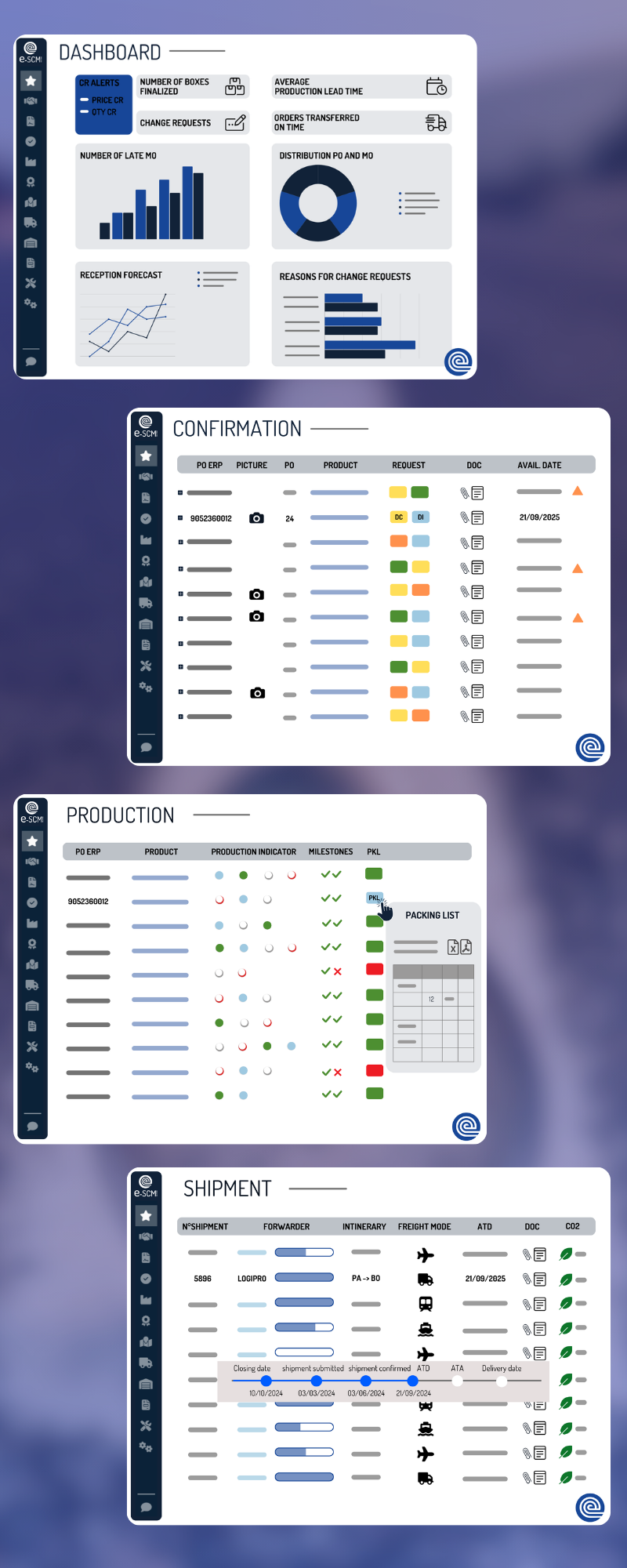
The e-SCM platform is collaborative and helps Fashion & Luxury brands to manage their supply chain from order to warehouse delivery, guaranteeing compliance, traceability and adherence to deadlines.
Thanks to e-SCM, companies have a more agile and efficient supply chain, capable of adapting to the demands of a constantly evolving market.
The implementation of this type of software is fully aligned with a broader transformation strategy. Find our complete analysis in the article " Digitalization of the Supply Chain: Issues, Challenges, and Performance Levers."
Reducing lead time improves responsiveness to market trends, strengthens cash flow through better inventory management, increases customer satisfaction, and provides a sustainable competitive advantage.
This optimization allows the company to respond quickly to business opportunities, ensure product quality and availability, and secure the overall performance of the supply chain.