In a modern supply chain, transport traceability and logistical visibility have become essential for securing supply flows. After production, transport organization represents a critical step, often impacted by logistical risks, delays, or a lack of information between stakeholders.
How can we improve transport controlwhile effectively involving suppliers, freight forwarders, and logistics teams ?
Integrating a Transport Management System (TMS) into the e-SCM centralizes shipping data, automates transport bookings, and tracks goods from production to warehouse delivery. The result: complete traceability, improved coordination among stakeholders, and real-time visibility across the entire transport process.
In order to improve transport traceability , the e-SCM platform integrates a Transport Management System (TMS) dimension in continuity with production monitoring.
The objective is to guarantee complete visibility of shipments, from the preparation of goods to their receipt in the warehouse.
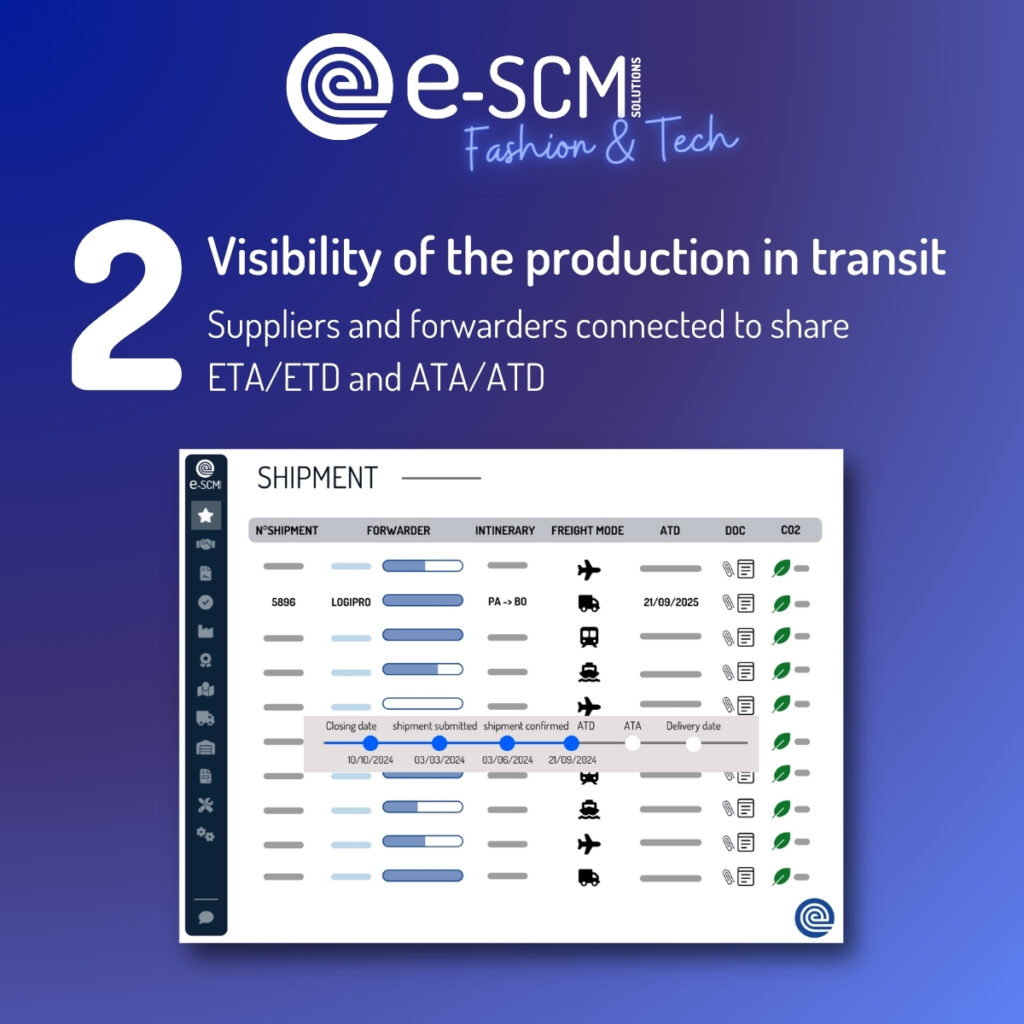
The platform facilitates, in particular, the document management of shipments through:
All the documents necessary for transport are thus directly linked to the shipment in the platform.
Furthermore, the supplier can provide the freight forwarder into the volumes and quantities to be shipped. This allows logistics teams to more effectively manage the goods receipt schedule.
The e-SCM platform integrates a Transport allowing the supplier to anticipate the logistics organization.
Several weeks before the end of production, the supplier can directly book transport with the freight forwarder, thanks to a connector based on web services.
This feature improves:
The platform automatically suggests groupings of departures to the freight forwarder based on packing lists and predefined criteria.
These criteria may include:
A preferred collection date is then proposed in order to optimize the transport organization.
Thanks to the real-time connection between the supplier and the freight forwarder, the supplier can directly submit a transport request.
In particular, it can:
The freight forwarder has filters that allow them to view requests according to different criteria, such as the name of the supplier.
Each transport request also has a clear status:
The Transport module of the e-SCM platform then allows the freight forwarder and logistics teams to confirm the shipment of goods and organize their receipt in the warehouse.
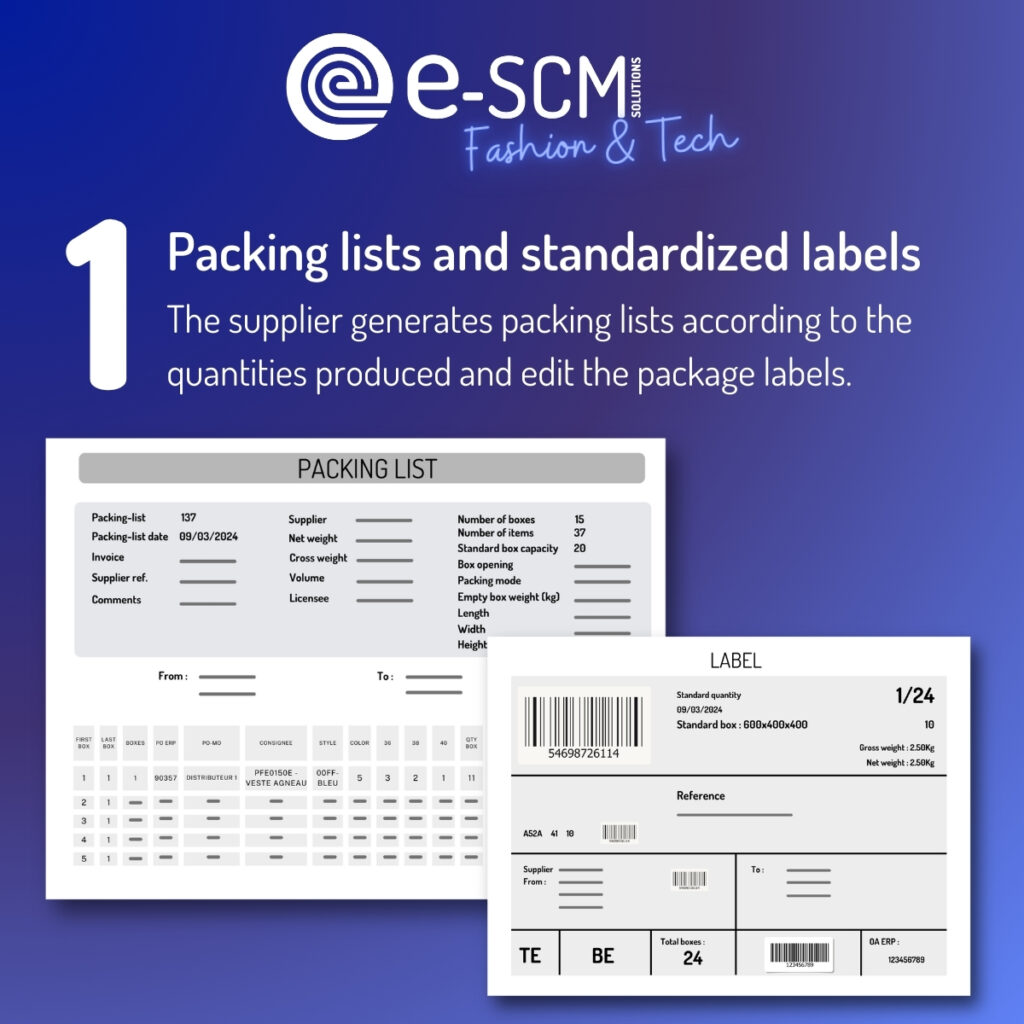
Once the collection date is set, the various stakeholders can track the progress of the transport.
Each user benefits from a customizable interface with different filters to analyze shipments.
The freight forwarder can also transmit real-time information on the status of the shipment via:
This allows the logistics manager to verify that the schedule is being followed and adjust the organization if necessary.
The platform consolidates packing lists from multiple suppliers in order to offer freight forwarders group shipments.
These groupings are based on various logistical criteria and include a recommended shipping date.
The objective is to optimize the organization of flows and the occupancy of transport vehicles.
The freight forwarder can then transmit the shipment details to the logistics department.
Several key dates have been announced:
It can also:
All this information improves logistical visibility and coordination between teams.
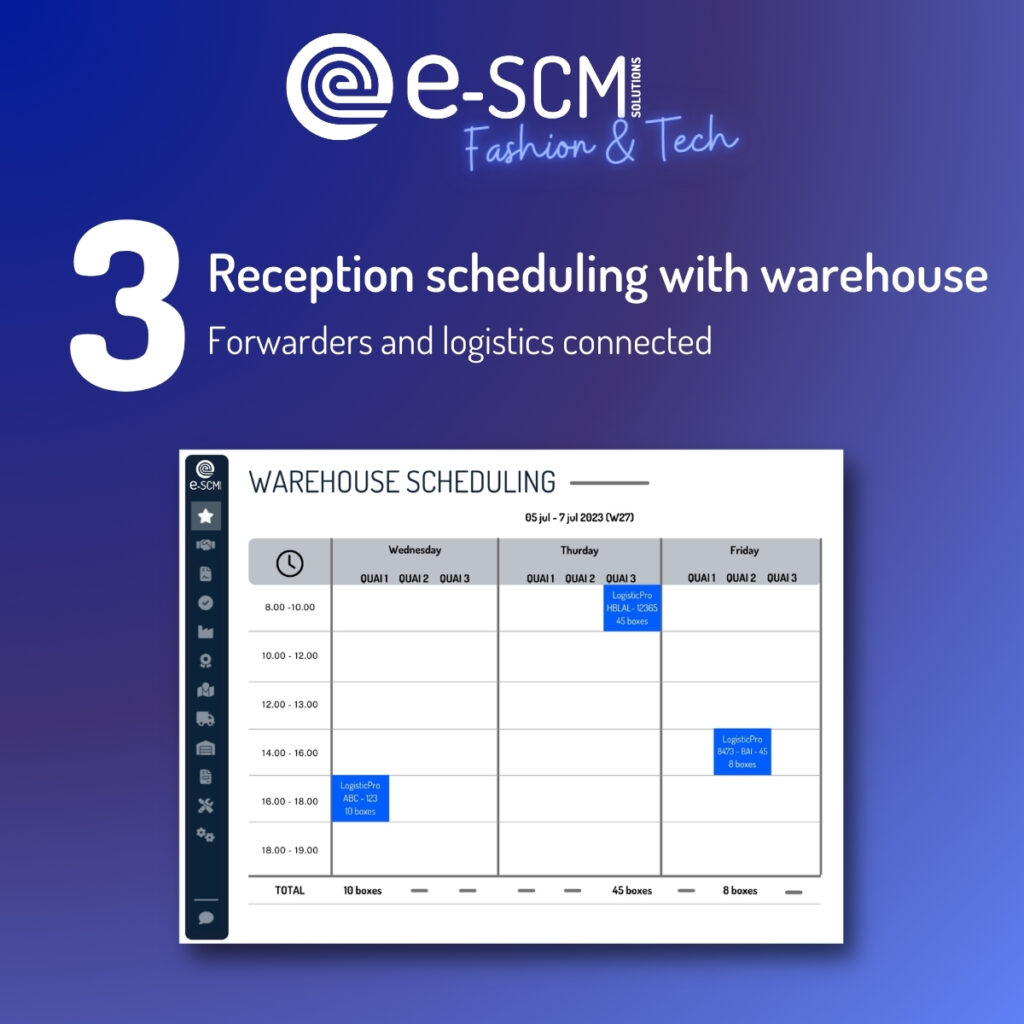
As delivery approaches, the e-SCM platform allows logistics teams to anticipate operations thanks to a receiving schedule.
The logistics professional can then view:
The different statuses include, in particular:
A warehouse calendar also allows for the planning of deliveries.
The freight forwarder can offer a delivery window, while the logistics provider can:
Integrating a Transport Management System into e-SCM strengthens collaboration between supply chain stakeholders.
The platform can be connected via API to various freight forwarders, such as:
The main benefits are: