The supply chain in the fashion and luxury sectors faces major challenges: constant collection renewal demands high responsiveness, while the fragmentation of the value chain and the multitude of stakeholders complicate coordination and reduce operational visibility. Added to this are strict regulatory constraints (standards, certifications, customs) and frequent risks of shortages related to raw materials and market fluctuations. These constraints require rigorous strategies to guarantee performance, agility, and quality.
To sustainably improve the supply chain, three essential levers come into play:

These levers encourage a cross-functional approach involving purchasing, marketing, logistics, management control, and suppliers. Sharing and ensuring the reliability of data creates a collective alignment that improves customer service levels, productivity, and the reliability of processes, while reducing unnecessary costs and controls.
Delegating certain controls to suppliers and using tools such as packing plans or harmonized labeling reduces errors and duplicate data entry. Furthermore, better transport planning optimizes container loading and favors more economical modes of transport, thus limiting costs and delays.
They allow for objective assessment of the supply chain, setting achievable objectives and initiating continuous improvement while mobilizing teams around a reliable common reference framework.
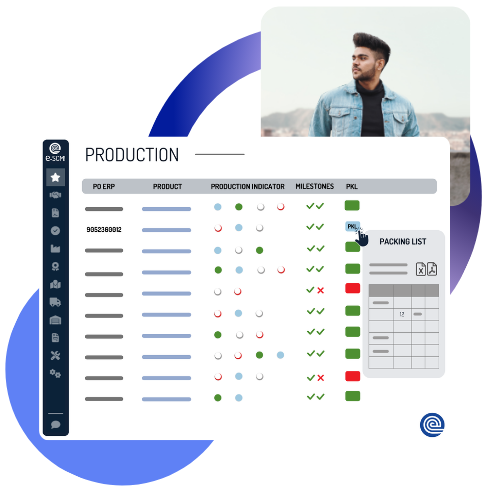
A high-performing supply chain in the fashion and luxury sectors relies on rigorous planning, agile operational management, and continuous analysis. With e-SCM, companies gain robustness, agility, cost efficiency, and collective alignment, thus meeting current market demands.