How does the integration of upstream data and warehouse management optimize the fluidity of flows and product availability?
In the fashion and luxury industry, mastering time-to-market is no longer simply an option, but a matter of survival. Luxury houses and ready-to-wear brands operate in an environment where volatile demand meets increasingly complex supply chains. To ensure that the customer promise is kept, from creation to delivery, decision-makers must orchestrate a seamless value chain.
In this architecture,SRM WMS (Supplier Relationship Management and Warehouse Management System) interoperability emerges as a major strategic solution. It bridges the historical gap between supply management and fulfillment logistics, transforming sequential processes into a continuous and synchronized flow of information.
The different chapters:
Warehouse performance is determined well before the trucks arrive at the loading dock. supply chain digitalization requires complete visibility into upstream flows, from the production order to shipment by the supplier. Too often, logistics suffer from disruptions (delays, non-conformities, quantity discrepancies) due to a lack of foresight.
Digitizing the upstream process means structuring and securing data exchanges with the ecosystem of suppliers and manufacturers. This allows management teams to move from a reactive approach, based on correcting errors upon receipt, to a proactive one. By capturing data at the source, the company builds a reliable foundation that will feed all downstream systems, thus guaranteeing the continuity of information essential for the speed of operations.
The SRM and WMS operate within distinct but intrinsically linked frameworks. The SRM acts as a control tower for supplier operations: it manages collaboration, production tracking, source quality control, and document management. Its role is to ensure that what is produced and shipped perfectly matches the brand's expectations.
The WMS, for its part, orchestrates the internal logistics execution. It optimizes storage locations, inventory movements, and order preparation. The key to interoperability lies in the ability of these two systems to communicate in real time. The SRM transmits reliable forecast data (Advanced Shipping Notices – ASNs) to the WMS even before physical receipt. This anticipation allows the WMS to plan resources and space, transforming the luxury fashion supply chain into a seamless and integrated process.

The technical and functional integration between supplier management and warehouse management generates immediate benefits for overall performance. First, it drastically accelerates receiving processes. Thanks to the data transmitted by the SRM, the warehouse can automate checks and integrate goods into stock much faster, thus reducing the time to market.
Secondly, this synergy enables inventory management . By having a clear view of stock in transit and in production, planners can more effectively prioritize replenishment and avoid safety stockpiling. This strengthens inventory accuracy, which is crucial for supporting an omnichannel where every item counts, regardless of the sales channel.
Finally, traceability is greatly improved. In the luxury sector, where authenticity and CSR compliance are paramount, the ability to trace a product's history from its raw materials (SRM data) to its final shipment (WMS data) is a major advantage. This digital continuity facilitates regulatory compliance and strengthens consumer confidence.
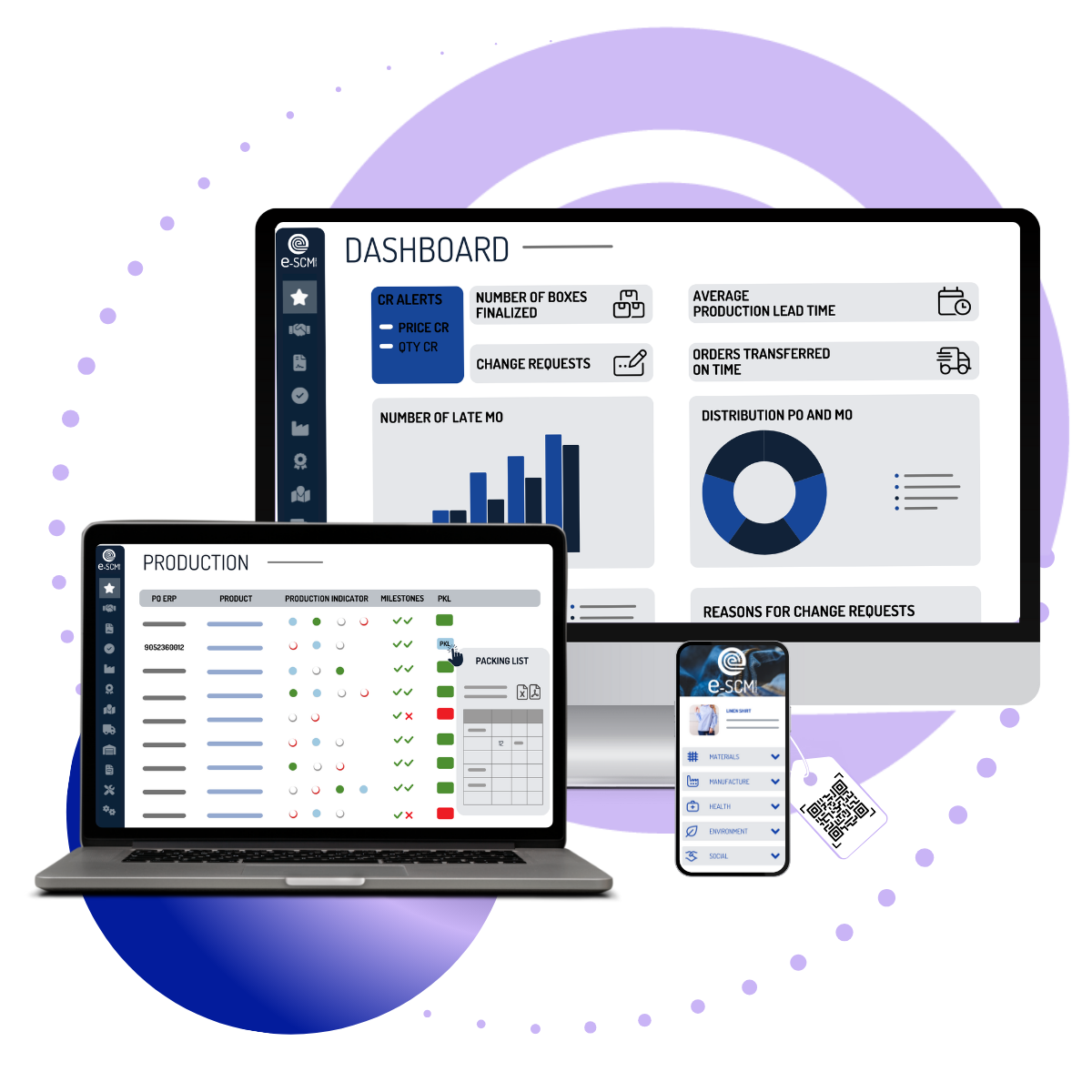
A recognized player for nearly 20 years, e-SCM Solutions positions itself as the guarantor of data reliability upstream of the warehouse. The platform is designed to offer brands 360-degree oversight of their supply chain. By centralizing data exchange, it enables order management, production milestone tracking, and shipment validation before departure.
The added value of e-SCM lies in its ability to structure collaboration with suppliers. The solution enables the generation of compliant shipping labels and accurate packing lists directly at the factory, which are then used directly by the WMS. Furthermore, its analytics and quality control modules, coupled with advanced traceability features (including the Digital Product Passport), ensure that products entering the supply chain meet industry standards. Available as a SaaS solution, it offers the flexibility needed to connect diverse international stakeholders.
Once the goods are received, LOGIA by ROIMA takes over to maximize the efficiency of intralogistics operations. This WMS solution stands out for its user-centric approach and support, notably through a highly visual interface and voice guidance technologies. The goal is to reduce the cognitive load on operators while minimizing picking errors.
LOGIA ensures intelligent management of locations and flows, whether for in-store replenishment or e-commerce orders. Its ability to natively interface with ERP systems and transportation solutions guarantees operational continuity. By integrating reliable upstream data, LOGIA can automate inbound processes and prioritize outbound flows, ensuring optimal responsiveness to customer orders. The solution, flexible in its deployment (Cloud or On-Premise), adapts to the specific constraints of fashion warehouses.
For industry decision-makers, viewing SRM and WMS as independent silos is a thing of the past.SRM-WMS interoperability now forms the foundation of a resilient and high-performing supply chain. By connecting the upstream management expertise of e-SCM Solutions with the execution power of LOGIA by ROIMA, companies secure their operations and gain speed. This integration is not limited to an IT project; it represents a crucial business strategy for supporting growth, optimizing working capital requirements, and delivering an exceptional customer experience.