Supply chain management, with e-SCM solutions, strengthens the traceability of operations
to improve brand performance and meet environmental regulatory requirements.
Supply chain management, with e-SCM solutions, strengthens the traceability of operations to improve brand performance and meet environmental regulatory requirements.
Supply chain management, with e-SCM solutions, strengthens the traceability of operations to improve brand performance and meet environmental regulatory requirements.
Market pressure demands greater transparency regarding the origin, manufacturing conditions, and shipping of products. It acts as a catalyst for refocusing the business model on eco-design and enhancing the value of products and the company's image.
e-SCM structures and simplifies the collection of traceability information throughout the supply chain. The brand can then demonstrate concretely to the consumer its commitment to sustainable fashion.
Market pressure demands greater transparency regarding the origin, manufacturing conditions, and shipping of products. It acts as a catalyst for refocusing the business model on eco-design and enhancing the value of products and the company's image.
e-SCM structures and simplifies the collection of traceability information throughout the supply chain. The brand can then demonstrate concretely to the consumer its commitment to sustainable fashion.

Using a unique code generated for each batch of finished product, it becomes possible to access all or part of the traceability data at the most granular level (or SKU):
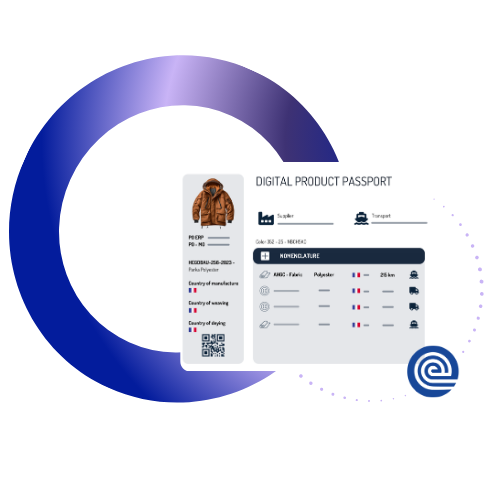
Traceability data is displayed as standard via a unique QR code. Brands define the data they wish to highlight to demonstrate and attest to their responsible commitments.
This aspect becomes particularly important in the marketing strategy to provide credible information to the end consumer, directly via a web page specific to the Brand, via trusted third parties or certifying Labels.
Total control of data makes it possible to define a different communication strategy during the product lifecycle, adapted to each consumer profile: in the store, after the sale, up to a second life or its dismantling for recycling.
Using a unique code generated for each batch of finished product, it becomes possible to access all or part of the traceability data at the most granular level (or SKU):
Traceability data is displayed as standard via a unique QR code. Brands define the data they wish to highlight to demonstrate and showcase their responsible commitments through the Digital Product Passport.
This aspect becomes particularly important in the marketing strategy to provide credible information to the end consumer, directly via a web page specific to the Brand, via trusted third parties or certifying Labels.
Total control of data makes it possible to define a different communication strategy during the product lifecycle, adapted to each consumer profile: in the store, after the sale, up to a second life or its dismantling for recycling.
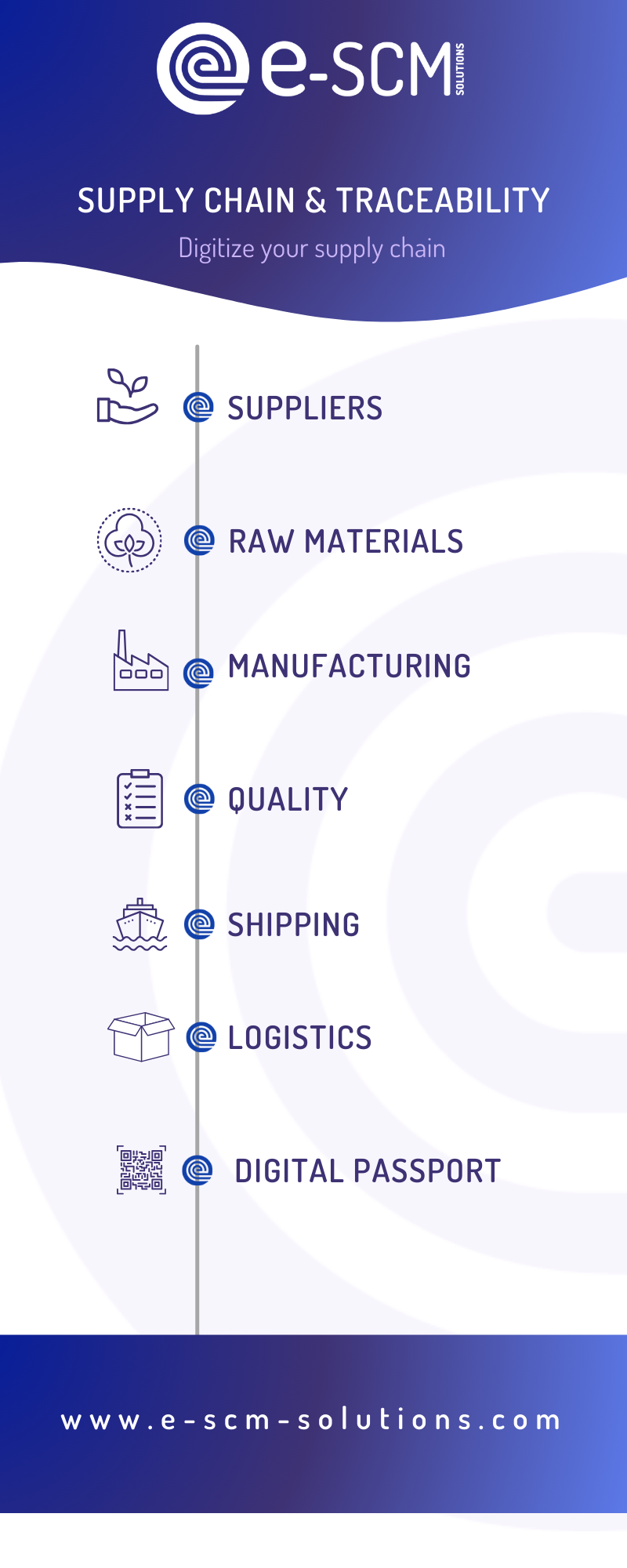
Monitoring of information relating to raw materials and components (origin and quality) and suppliers.
Supplier selection, definition of product quality criteria and raw materials and components
Monitoring of information related to quality controls of finished products
Monitoring of transport methods and delivery operations for finished products
Monitoring of information relating to raw materials and components (origin and quality) and suppliers.
Supplier selection, definition of product quality criteria and raw materials and components
Monitoring of information related to quality controls of finished products
Monitoring of transport methods and delivery operations for finished products