Since January 1, 2023, the AGEC law (anti-waste for a circular economy) requires producers to provide essential information on each product to inform purchasing decisions "product sheet relating to environmental qualities and characteristics ." This information includes the traceability of the production chain, the hazardous nature of any substances present, and the risks of plastic microfibers associated with the use of synthetic materials. The law also requires notification of the presence of recycled materials and the recyclability of each product.
Origin, health risks, environmental impact… Transparency is now displayed directly in stores to address the main concerns of increasingly demanding consumers. For brands, producers, and importers, the pressure is mounting because the AGEC law foreshadows the arrival of another regulation in 2024:environmental labeling.

The challenge is significant, but solutions exist—digital solutions tailored to the size of each operator—to activate product passports on each label. This is revealed in the state-of-the-art report from the Transparency and Traceability working group of the BALI Chair, presented to industry professionals at the last Biarritz Good Fashion event and accessible to all on the BALI Chair website.
Produced by Pantxika Ospital, PhD student in charge of the thesis "Transparency and Traceability" supported by Belharra Numérique, with the contribution of Bixente Demarcq, research engineer at ESTIA, and the support of Paris Good Fashion, the deliverable lists and analyzes for the first time the concepts, solutions and best practices
in Europe.
Objective: to enable marketers to see more clearly in order to choose the right tools.
We have produced a white paper on traceability based on the results of this study and our experience as the publisher of the e-SCM solution, dedicated to managing the supply chain process for brands in the fashion and luxury sector. You can download it below in your preferred language:
The product passport links traceability and transparency . This passport dynamically expands the information displayed on the product label . It provides access to information on the origin, composition, repair and disassembly options, as well as end-of-life product management. This information promotes product circularity by facilitating maintenance, repair, resale, rental, dismantling, and recycling.
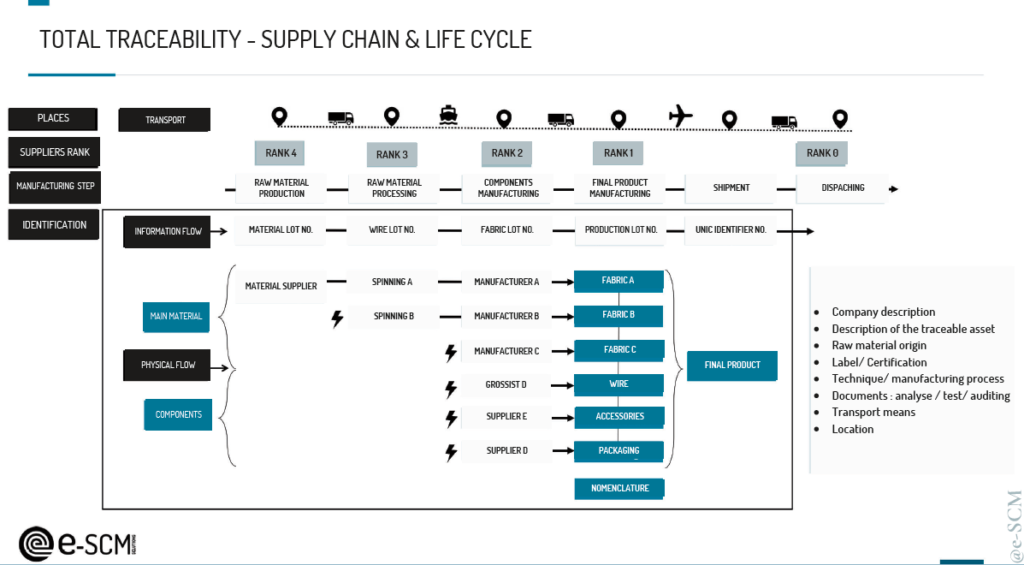
Understanding the challenges for the fashion industry
For products in the fashion and textile, transparency can be defined as the accessibility of traceability information. In a globalized context where brands outsource their production, traceability allows them to better understand their supply chain, comply with due diligence requirements, and gather all the necessary elements for a reliable audit trail.
This data collection is the key to traceability; the transparency of fashion companies depends on the reliability of this information. In turn, this information can facilitate:
The technological means supporting traceability
There are several types of digital traceability solutions:
Technological means supporting transparency
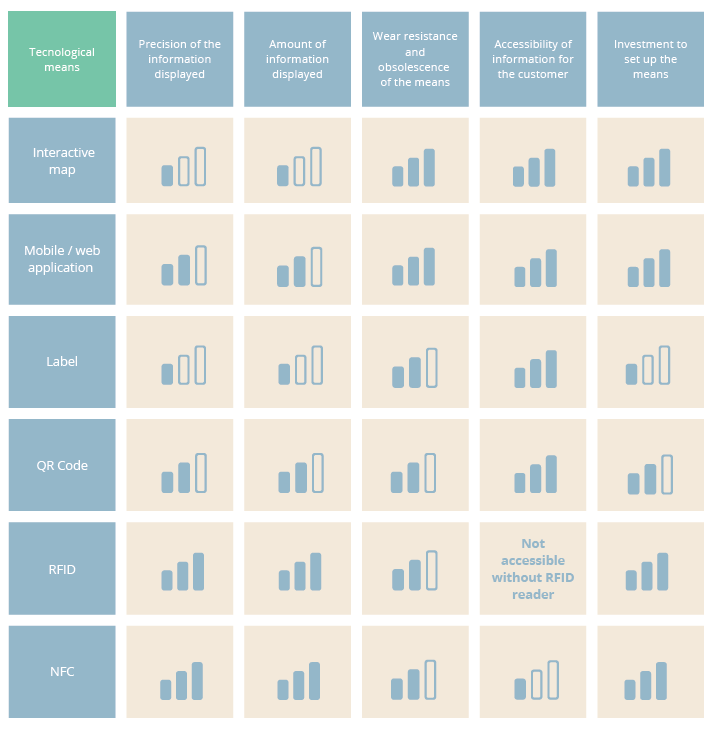
Source: Report "State of the art of traceability and transparency solutions", Traceability Working Group, BALI Chair | Paris Good Fashion | Belharra Numérique