
The Capgemini Research Institute report indicates that, faced with supply chain disruptions, companies will prioritize investment in supply chain and digital technologies .
According to the new report from the Capgemini research institute, supply chain disruptions due to the energy crisis and rising raw material costs are becoming a major risk for 89%* of companies.
To minimize risk, 43%* of executives want to invest more in 2023 to make their supply chain more resilient.
A strategy of diversifying supply chains is considered a priority, such as:
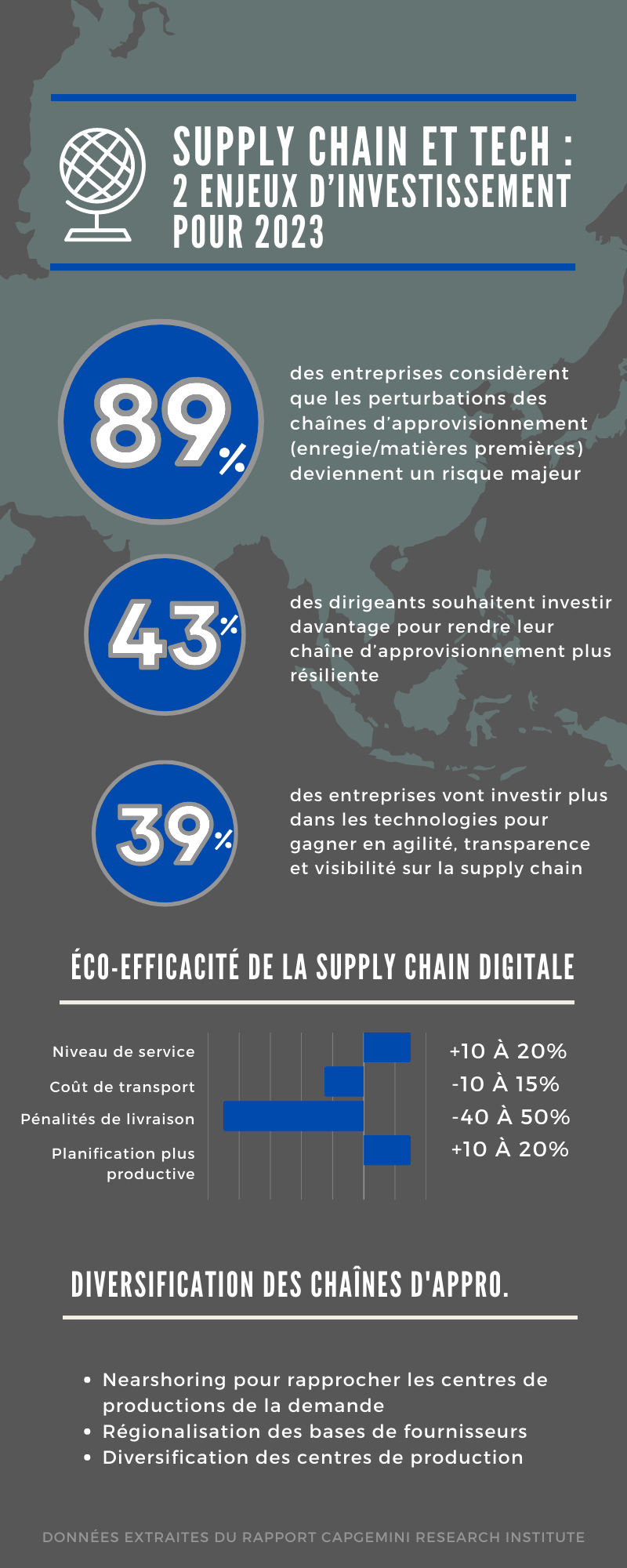
39%* of companies will increase their investment in technology to support their transformation strategy in order to gain agility, transparency , and visibility over the supply chain. The goal is to reduce costs and leverage data management to make faster decisions.
And nearly 50%* will strengthen their cybersecurity to protect their information system and limit the risk to their business.
A survey conducted by McKinsey & Company shows that more than 90%** of executives who had a digitized supply chain during the Covid19 crisis were able to maintain their business and deal with the problems encountered.
Digitalization, particularly data management, will help companies become more productive, flexible and agile in the face of unforeseen events, for example by reducing inventory and the cost of goods sold by 30%**, reducing the cost of quality by 50%** and improving cash flow and productivity by 30%**.
McKinsey & Company indicates that digitalization in industry can boost eco-efficiency in supply chains. Supply chain digitalization tools are particularly effective when they support a company's overall strategic approach.
For example: service levels are 10 to 20%** higher, transportation costs are 10 to 15%** lower, delivery penalties to customers are 40 to 50%** lower, planners are 10 to 20%** more productive.
The e-SCM cloud solution , dedicated to the fashion and luxury sector, offers comprehensive end-to-end visibility of the supply chain. It allows for anticipating risks as early as possible and avoiding or correcting them more quickly.
e-SCM offers to work in collaboration with all suppliers and partners in the chain, promoting exchanges on order adjustments, monitoring of production milestones, organization of shipments/receipts in warehouse… The platform meets the needs of supply managers who wish to anticipate shortages, mitigate production risks and reduce the risk of “supplier” disputes with a 360° view of the process.
According to a study by the Capgemini Research Institute, faced with economic constraints, more than half of companies are less inclined to invest more in sustainable development, and only 33%* want to do so. This study indicates that less than a third will be able to meet their objectives in this area.
However, it has been shown that companies that have promoted responsible practices have better than others.
Digitalizing the supply chain ensures an efficient supply of raw materials to production lines. This system streamlines procurement to produce as close as possible to sales.
With the e-SCM solution, procurement, production and distribution are digitized and optimized so as to be able to respond in an agile and flexible to business needs, to move towards streamlined production that meets current regulatory requirements.
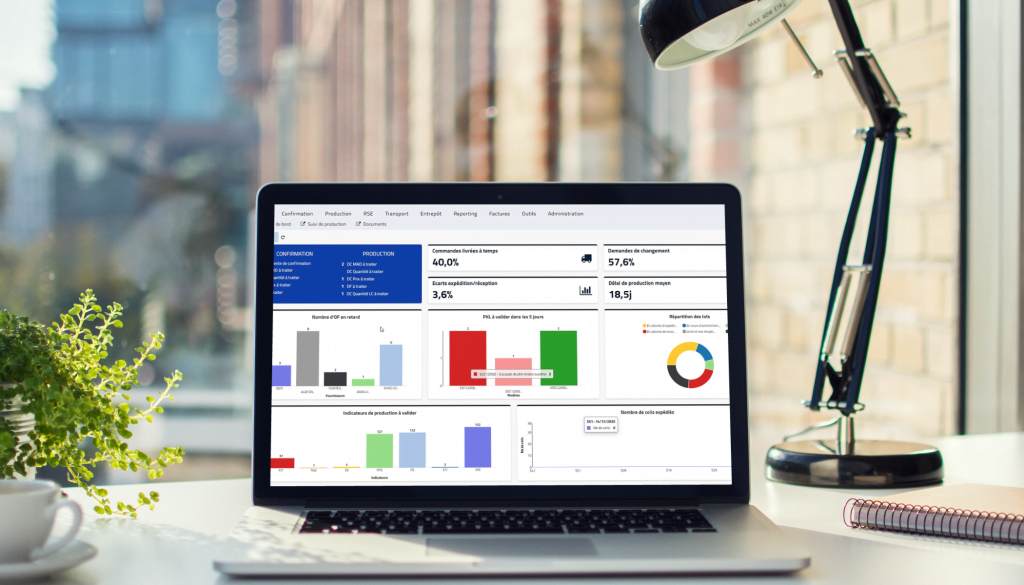
This agility leads to shorter lead times and reduced inventory, which will allow the brand to achieve significant gains (reduced costs, shorter time to market, increased profitability).
Limiting unsold goods also leads to gains in recycling and upcycling issues.
e-SCM supports the implementation of this new model which aims for more responsible and sustainable production for brands.
In addition, e-SCM offers a traceability that optimizes the management of increasingly fragmented supply chains and also collects all information on the manufacturing cycle of the finished product to provide it to the end consumer.
Strengthening the traceability of operations with e-SCM thus enables the collection at the source and in real time of reliable and verified data both internally and with suppliers: Origin and composition of materials, controls in factories, energy consumption, transport… All strategic information is then transcribed into key indicators to be transparently presented to the consumer.
Thanks to data collection, e-SCM automatically generates a unique Digital Passport for each product and each production order. This solution will help brands meet the requirements of the AGEC law on consumer information and also anticipate upcoming regulations on environmental product labeling.
*Source: data from the Capgemini Research Institute report.
For this study, the Capgemini Research Institute surveyed 2,000 individuals from unique organizations with more than $1 billion in annual revenue, across 15 countries, in November and December 2022, and analyzed their investment strategies for the next 12 to 18 months in the areas of digital transformation, supply chains, talent and skills, and sustainable development.
** Source: Data from a McKinsey & Company article. Q COVID-19: A Turning Point for Industry 4.0.