In a context of globalization of trade and increasing instability of supply chains, respecting deadlines in the upstream supply chain has become a strategic issue.
Supply chain management must deal with increasingly complex flows, including multiple stakeholders, from production to final delivery, knowing that any deviation in service levels can have repercussions on marketability and therefore a direct financial impact.
e-SCM Solutions offers a robust digital solution designed to ensure precise, real-time tracking of key dates in the upstream logistics process. Thanks to an intuitive interface and an intelligent calculation algorithm, the platform enables proactive lead time management and seamless coordination between suppliers, logistics services, freight forwarders, and warehouses.
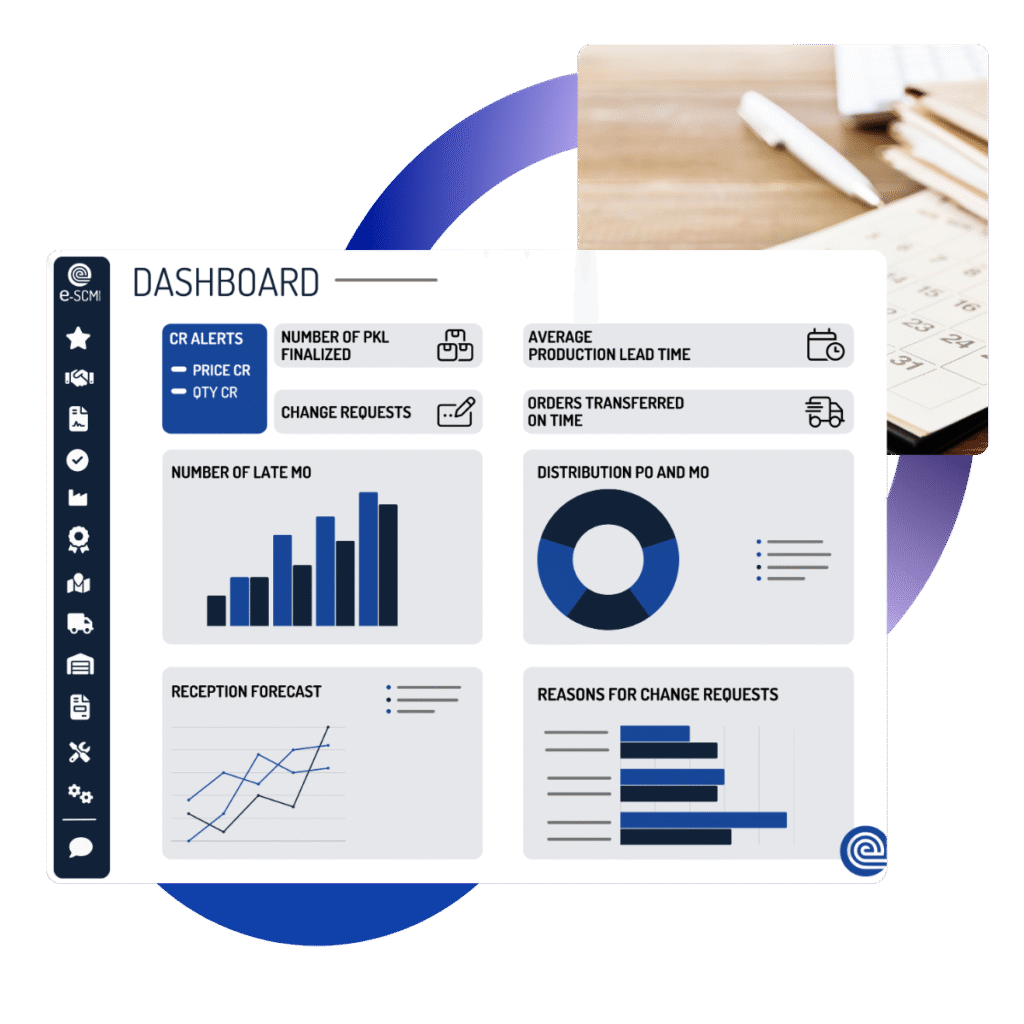
Depending on the incoterm chosen (FOB, EXW, DDP…), the expected date of receipt in the warehouse and the specific parameters for each product universe, an e-SCM algorithm makes it possible to deduce the forecast dates of all the parameterized milestones and therefore define the critical points to follow.
From the expected date of receipt in the warehouse, a reverse schedule is automatically calculated taking into account all intermediate delays such as pre-production checks, production, preparation of shipments, transport, customs clearance, warehouse receipt, etc. Thus the provisional schedule established sets the deadlines to be followed daily by the different actors throughout the life cycle of the purchase order.
Real-time updates and dynamic adjustments
In daily operations, each milestone is monitored, and as soon as an unforeseen event impacts or risks impacting the projected schedule, an alert is generated. Any potential or observed delay leads to a recalculation of the planned warehouse delivery date. Users, informed of the discrepancy between the expected and planned schedule, can take corrective action to mitigate the impact.
This system allows for up-to-date visibility for all actors in the chain, limiting the "domino effects" linked to unanticipated delays.
e-SCM therefore enables the management of critical stages in the flow, from the purchase order being sent to the supplier to the receipt of products in the warehouse:
All these elements are configurable in e-SCM, which allows for a comprehensive and up-to-date view of the logistics plan.
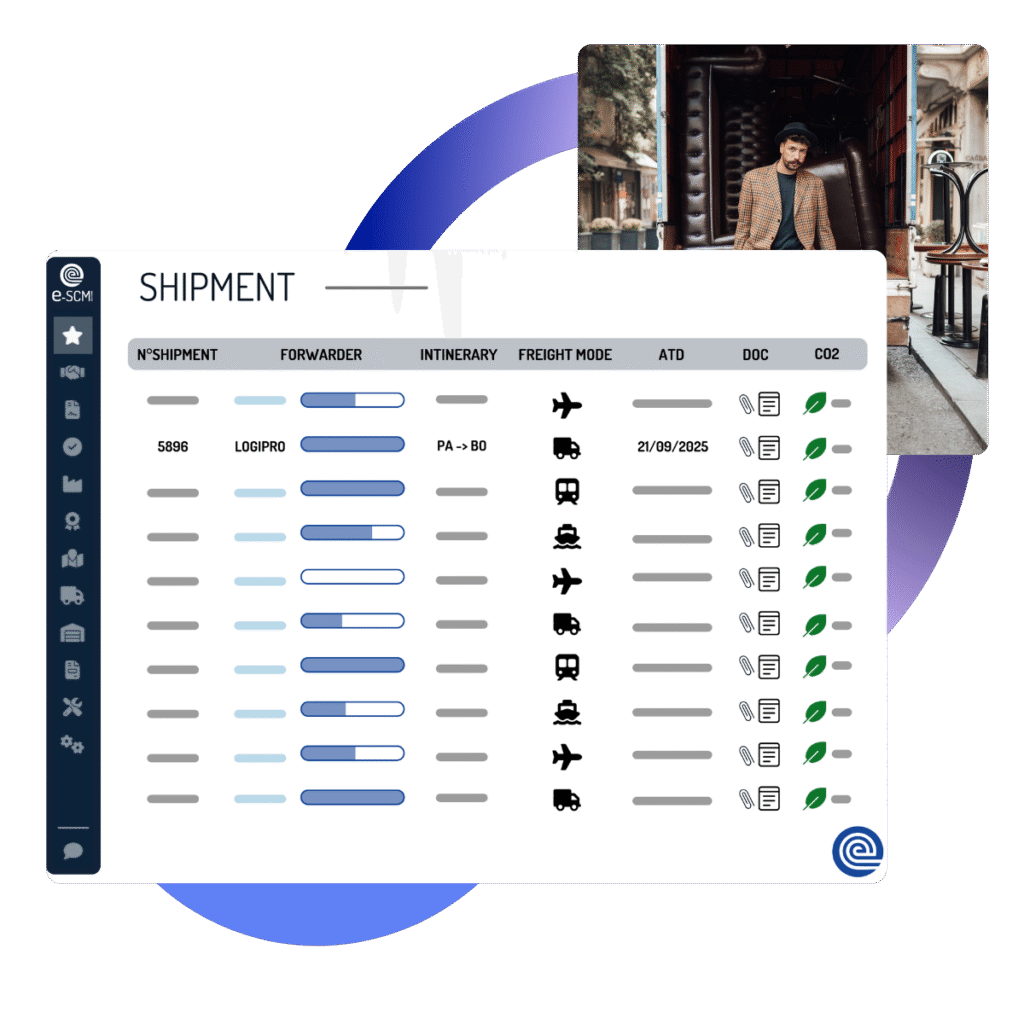
The tool relies on an "exception-based" management system. This means that the user is only informed of what is not normal or in accordance with the planned schedule. Therefore, they focus solely on exceptions, which automatically generate alerts in the event of:
Customizable dashboards allow each stakeholder (supplier, logistics provider, freight forwarder) to track their own milestones and thus focus on their priorities. They can react early to make proactive decisions based on reliable and traceable data.
According to a McKinsey study (source: McKinsey & Company, 2022), 80% of logistics delays in manufacturing companies are caused by poor synchronization of upstream flows, often linked to a lack of visibility on the actual dates of production, transport and receipt.
Furthermore, the digitalization of logistics tracking is now a key factor in resilience: companies capable of recalculating lead times in real time react twice as fast to disruptions, significantly reducing supply chain disruptions. In this context, supply chain performance issues become central for organizations seeking to secure their flows, reduce costs, and strengthen their ability to anticipate logistical and industrial risks.
In summary: the benefits of date tracking with e-SCM
Do you want to improve the reliability of your delivery times and optimize your upstream supply chain?
Contact our experts now for a personalized e-SCM demonstration.