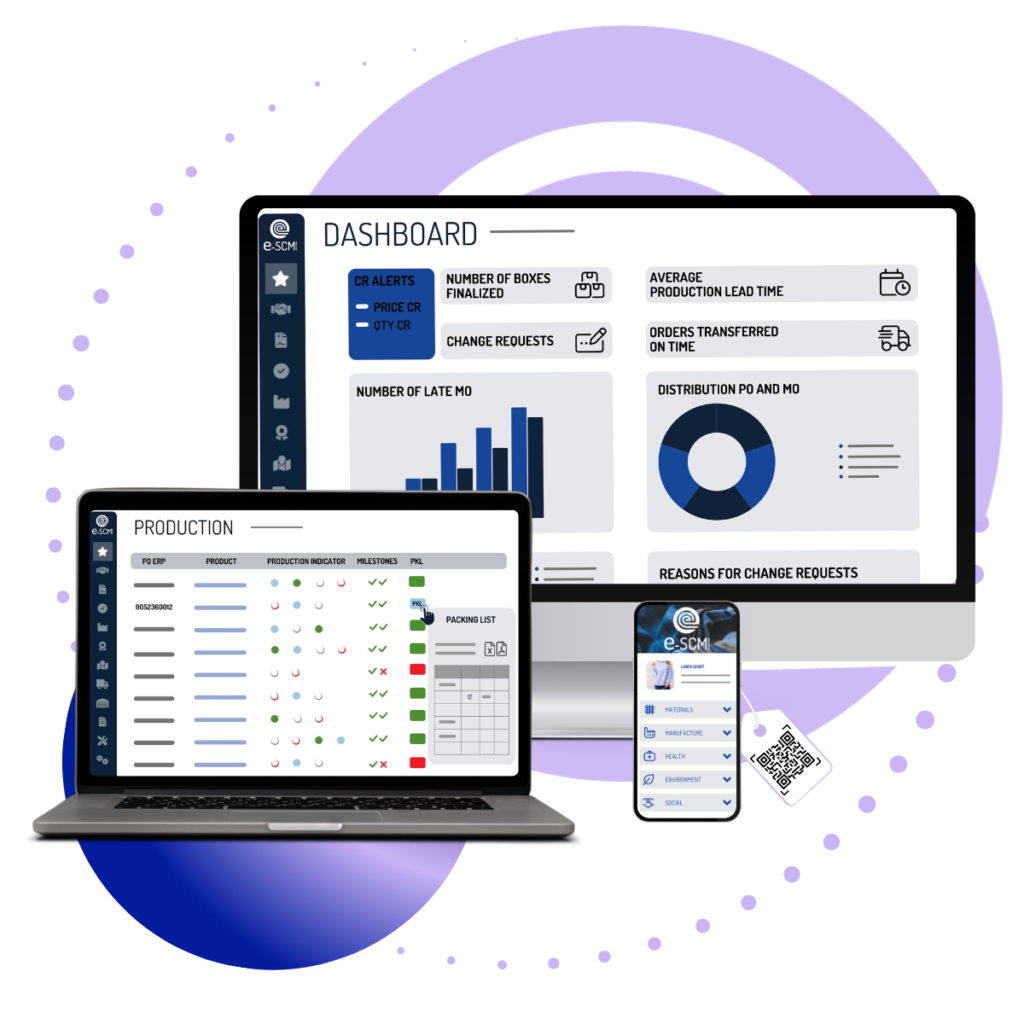
Securing and centralizing data is now a strategic challenge for supply chain companies. It allows both for improved collaboration and more reliable operations.
Supplier platforms like e-SCM serve a dual purpose. On the one hand, they simplify workflows between partners. On the other hand, they ensure smooth and consistent data management across the entire supply chain.
Securing and centralizing data is directly linked to a governance approach. It constitutes a key pillar of data digitalization and governance within organizations.
Indeed, effective governance guarantees the quality, traceability, and compliance of information. This allows companies to better manage their operations and reduce risks.
The upstream supply chain relies on a complex ecosystem. The data is abundant, heterogeneous, and critical. It directly impacts operational and financial performance.
Furthermore, they play an increasing role in ESG reports.
The main flows involved are:
This data involves several services. Therefore, sharing it becomes essential.
Securing and centralizing data allows these flows to be unified. It also facilitates the collection of information from external partners.
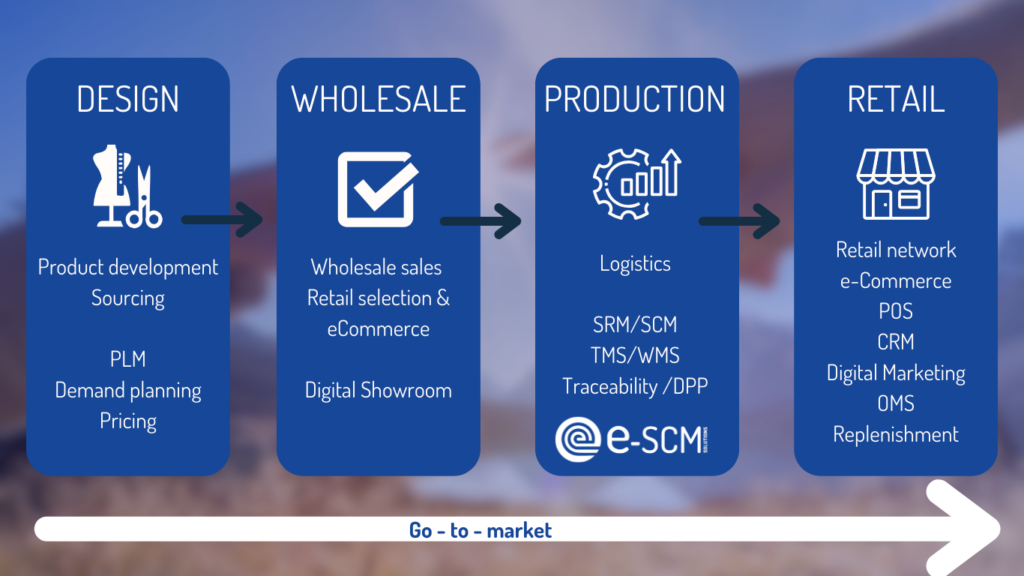
The e-SCM platform acts as a single repository. It centralizes production and transport data.
Initially, it interfaces with the brand's ERP system. Then, it structures the incoming data flows to make them usable.
Key features include:
Thus, companies can better secure their data during the project while limiting human error.
e-SCM offers flexible integration with the leading ERP systems on the market. These include SAP, Microsoft Dynamics, and Cegid.
Several integration methods are available:
Furthermore, connections already exist with major players such as DHL and Bolloré Logistics. This enhances the fluidity of operations.
The platform is based on a secure SaaS infrastructure. It is hosted on Microsoft Azure.
The data is stored in Western Europe. This ensures regulatory compliance and information sovereignty.
Furthermore, the cloud environment offers several advantages:
Thus, data security and centralization are ensured throughout the entire operational period.
Data integration directly improves overall performance. Teams gain access to reliable and actionable data.
As a result, decision-making becomes faster and more relevant.
The solution also allows:
Finally, it fosters collaboration between stakeholders. As a result, the service level increases and value creation improves.
To learn more, discover the features and benefits of the e-SCM Solutions solution through dedicated content.
Indeed, customer feedback provides a concrete view of the results achieved. It illustrates the real impact of data security and centralization on operations.
Inside, you will find authentic testimonials. These highlight the positive transformations achieved through the platform.
Furthermore, these case studies detail several levers for improvement:
Thus, this feedback from the field allows us to better understand how e-SCM fits into an overall performance strategy.